

No Subscription, No Problem: The Ultimate Guide to Smart Home Door Sensors
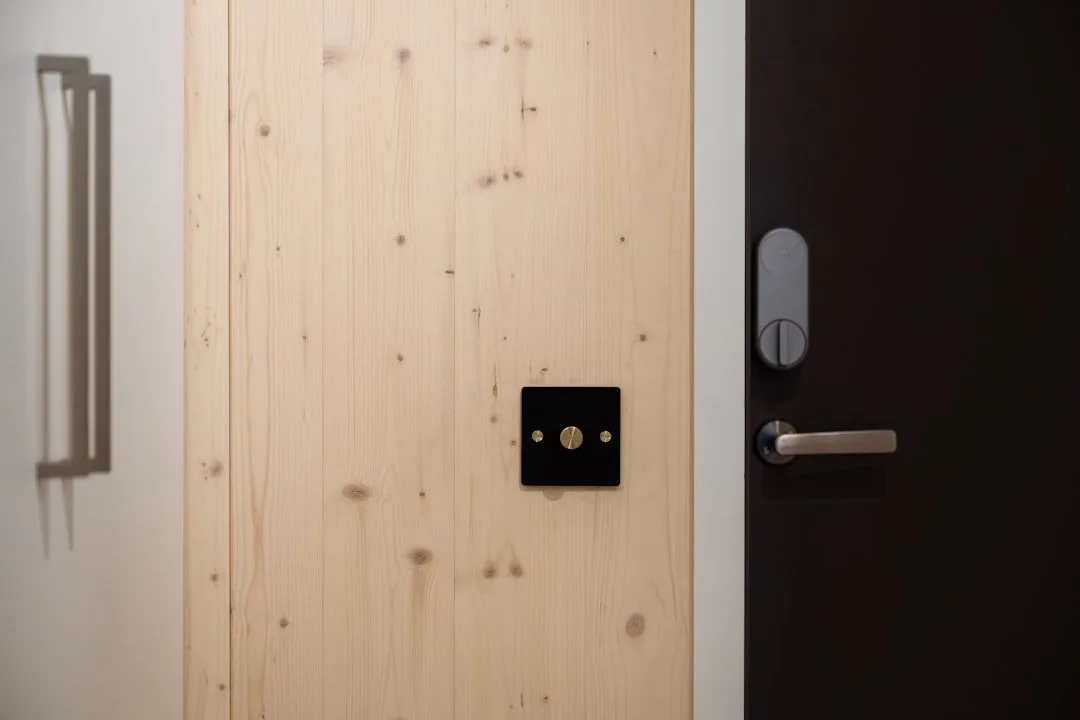
Smart door sensors are small, wireless devices that detect when a door or window opens or closes — one of the most practical and affordable upgrades you can make to a home security system. Most cost as little as $18, and none of them require a monthly subscription to function.
How They Work
The majority of smart door sensors are “contact sensors” built around a magnetic reed switch, split into two pieces: a transmitter containing the wireless radio, battery, and reed switch, and a small magnet. When the door is closed, the magnet holds the reed switch closed, registering a “closed” state. When the door opens, the magnet moves away, the circuit breaks, and the transmitter wakes up and broadcasts an “open” signal to your hub.
Beyond the classic two-piece design, a few variations are worth knowing:
- Hidden or recessed sensors are cylindrical and installed inside a drilled hole in the door and frame, making them completely invisible when the door is closed.
- Multi-state sensors, like the Aqara P100, use an internal gyroscope and accelerometer instead of a separate magnet, detecting tilt, rotation, and vibration — useful for casement windows, safes, or drawers.
- Outdoor sensors need heavy-duty weatherproofing to survive humidity and rain, and often use long-range wireless protocols to cover gates and fences.
What to Look For
When comparing sensors, a few specs matter more than the price tag:
- Battery life: most sensors run 2 to 5 years on a single battery; Zigbee-based models from Aqara and SONOFF can push past 5 years.
- Signal range and mesh: Zigbee and Thread sensors use mesh networking, bouncing signals through other mains-powered devices to extend range — generally more reliable than standalone Bluetooth or WiFi for a spread-out property.
- Tamper protection: better sensors include a physical tamper switch or accelerometer that triggers an alert if someone tries to pry the sensor off the frame.
- Local control: sensors that talk directly to a local hub, rather than routing everything through the cloud, keep working if your internet connection drops.
On protocol, Zigbee and Z-Wave are dedicated, low-power, mesh-networked smart home protocols. Thread is a newer IP-based mesh protocol that underlies the Matter standard. WiFi sensors, by contrast, are power-hungry — they typically last under 6 months on a battery and introduce reporting delays, since the sensor has to wake up, connect to the router, and get an IP address before it can send an alert.
A Few Notable Models
Among current options, the Aqara Door and Window Sensor is a longstanding favorite — compact, Zigbee 3.0-based, and rated for roughly 2 years on a CR2450 battery. The SONOFF SNZB-04P uses a larger CR2477 battery for a theoretical 5+ year lifespan and includes a tamper button. The Shelly BLU Door/Window ZB adds tilt and light-level sensing on top of open/close detection, in a 35x35mm footprint with up to 5 years of battery life on a single CR2032 cell.
Beyond the Alarm
Sounding an alert during a break-in is the obvious use case, but the real value shows up in automation. Linking a patio door sensor to your climate system can automatically pause the HVAC if the door is left open for several minutes, saving energy and reducing wear on the equipment. Pairing sensors with lighting means a door opening after sunset can quietly light a path without anyone reaching for a switch.
If you’re building out a system for a larger property, proper placement matters as much as the hardware. Clean the mounting surfaces before applying adhesive, align the sensor’s built-in alignment marks, keep the gap between the sensor and magnet within the manufacturer’s spec — typically under 20mm — and test the connection before committing to the final placement.
If you’d like help mapping out a whole-home sensor layout, or connecting it to lighting, climate, and monitoring, we’re happy to talk through the options.