
An Essential Guide to Energy Management Basics
Energy management is the ongoing process of monitoring, controlling, and optimizing how energy is used — with the goal of cutting waste, reducing costs, and lowering your environmental footprint. Energy isn’t cheap: for commercial buildings, it’s typically the single largest operating expense, representing roughly a third of a typical operating budget, and office buildings can waste up to a third of the energy they actually consume. For homeowners, rising utility rates, grid instability, and increasingly complex regulations — especially in California — mean managing your home’s energy is no longer optional.
Why It Matters More Than Ever
Building operations account for almost 30% of global final energy use and more than a quarter of energy-related CO2 emissions. Much of that is pure waste: outdated HVAC schedules and lighting left on in unoccupied commercial spaces, or in luxury residential properties, unoptimized pool heating, large climate zones fighting solar heat gain, and entertainment systems drawing constant “vampire” loads around the clock. Identifying and eliminating that waste is the fastest way to lower your bills and your footprint at the same time.
Grid instability adds another layer. Homeowners across Southern California regularly experience grid strain and planned safety power shutoffs. Localized energy security — solar arrays, battery backup, and intelligent load shedding — protects a property from blackouts while shielding it from volatile peak-time utility rates.
The Real Benefits
A structured energy management approach is one of the few initiatives where environmental responsibility and financial reward point in the same direction:
- Lower bills and protection from peak rates. Reducing energy use directly cuts monthly costs and shields you from high Time-of-Use pricing.
- Predictive maintenance. Monitoring the electrical draw of HVAC compressors, pool pumps, and other major loads can flag a failing motor — one drawing 20% more current than normal — before it fails outright, preventing costly downtime.
- Energy independence during grid failures. A well-designed system keeps critical circuits running when the grid doesn’t.
- Higher resale value. Energy-efficient, automated homes are increasingly attractive to buyers and easier to certify.
The Technology Behind Modern Energy Systems
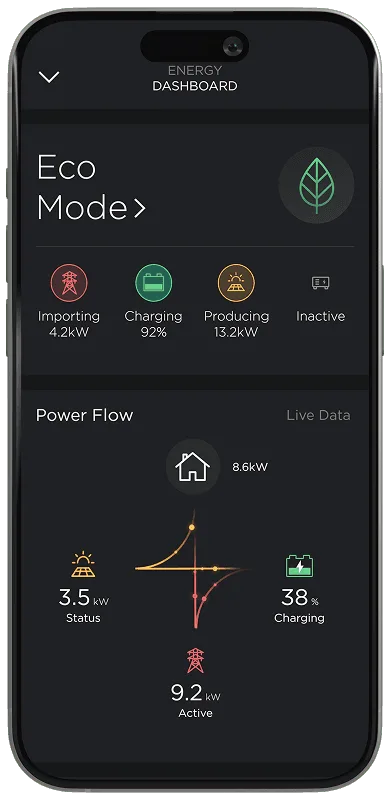
At the residential level, the heart of modern energy control is the smart electrical panel. Traditional panels are entirely passive — simple breakers that trip only during an overload. A smart panel uses intelligent relay modules to provide circuit-level monitoring and control, which makes automated “Eco Mode” behavior possible: during peak utility pricing hours, the system can automatically dim non-essential lighting, nudge the climate control by a couple of degrees, and temporarily pause EV charging.
These controls also tie into lighting and shading. Automating motorized shades to lower during the hottest part of the day blocks solar heat gain before it ever reaches your HVAC system, cutting cooling load without sacrificing design or comfort.
Planning for California-Specific Realities
Compliance with California’s Title 24 energy efficiency requirements is mandatory for new construction and major renovations, and the shift to NEM 3.0 net metering has made simply exporting solar power back to the grid far less lucrative than it used to be. That changes the math: homes increasingly need to move from passive solar generation toward intelligent storage and load shedding to get real value from their systems. When utility rates spike or a planned outage is initiated, a properly configured home can shed non-essential circuits, adjust shades to block solar heat, and shift critical systems to stored battery power automatically.
Getting Started
Taking control of your energy footprint doesn’t require sacrificing comfort or design. The right approach starts with understanding where your home or building actually consumes and wastes energy, then layering in monitoring, automation, and storage in a way that fits your goals and your budget. If you’re weighing where to start — a smart panel, battery backup, or a full energy management build-out — it’s worth having a conversation with an integrator who can walk through your options before you invest in any one piece of hardware.