

Beginner's Guide to Smart Lighting
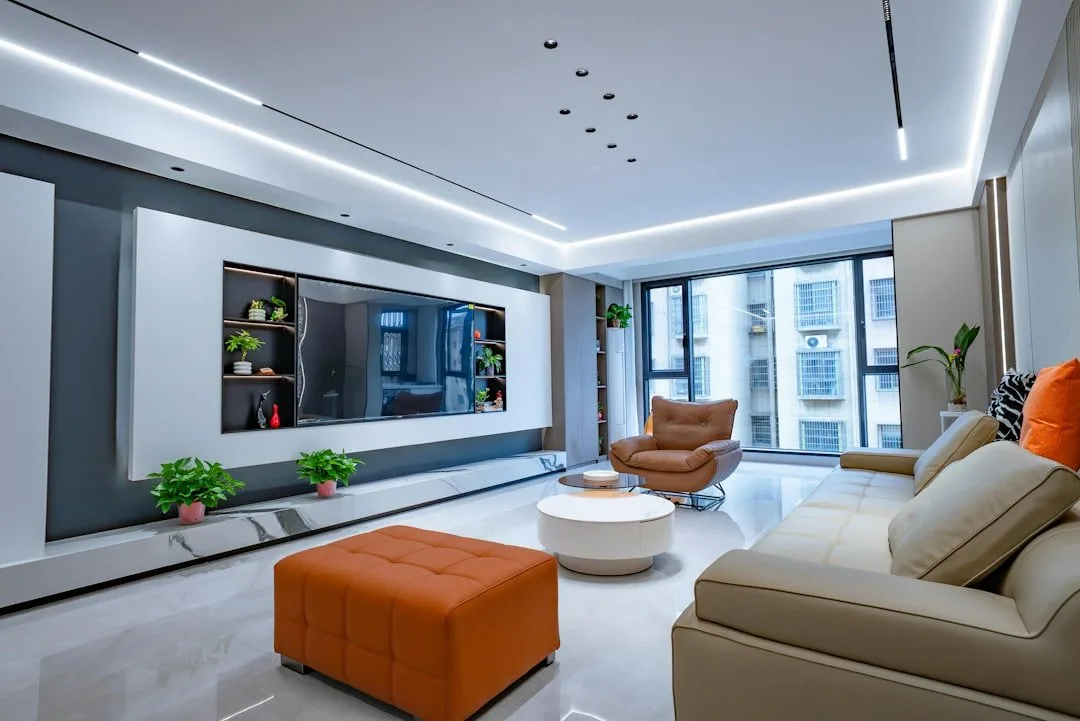
If you’re considering smart lighting for the first time, it helps to think of it less as a single product and more as a system: bulbs, switches, and a hub or app that lets them talk to each other and to you.
How Smart Lighting Actually Works
At its core, a smart lighting setup swaps traditional switches and bulbs for connected fixtures that can be controlled remotely, scheduled automatically, and grouped into scenes. Most systems rely on a wireless protocol — Wi-Fi, Zigbee, or a proprietary mesh network — to link fixtures to a central hub or app.
The simplest setups replace individual bulbs and connect directly to your home Wi-Fi. More advanced installations use dedicated in-wall dimmers and a lighting-specific control system, which tends to be more reliable at scale and doesn’t depend on a bulb’s own firmware.
What It Can Actually Do for You
- Scenes, not just on/off. Group multiple fixtures into a single “Morning,” “Movie Night,” or “Away” scene that adjusts brightness and color temperature across a room with one tap.
- Scheduling and presence. Lights that follow sunrise/sunset, or respond to whether anyone is actually home.
- Energy savings. Dimming and scheduling alone can meaningfully cut lighting-related energy use compared to fixtures left running at full output.
- Layered control. Voice assistants, wall keypads, and an app all controlling the same system, so the right person always has the right interface.
Starting Simple vs. Building a Whole-Home System
A single room of smart bulbs is a reasonable way to try the idea, but it has real limits — every family member needs the app, automations can be flaky if a bulb loses power at the switch, and scaling up room by room gets expensive fast.
For a primary residence, a professionally designed system — in-wall dimmers, a proper lighting controller, and scenes tuned to how you actually use each room — tends to be more reliable and easier to live with day to day, especially once shades, climate, and entertainment are part of the same system.
Getting Started
If you’re unsure whether to start small or plan for the whole house, it’s worth having a conversation with an integrator before buying any hardware. A short consultation can save you from re-doing wiring or replacing incompatible fixtures later.