

In-Depth Guide to Home Security Systems
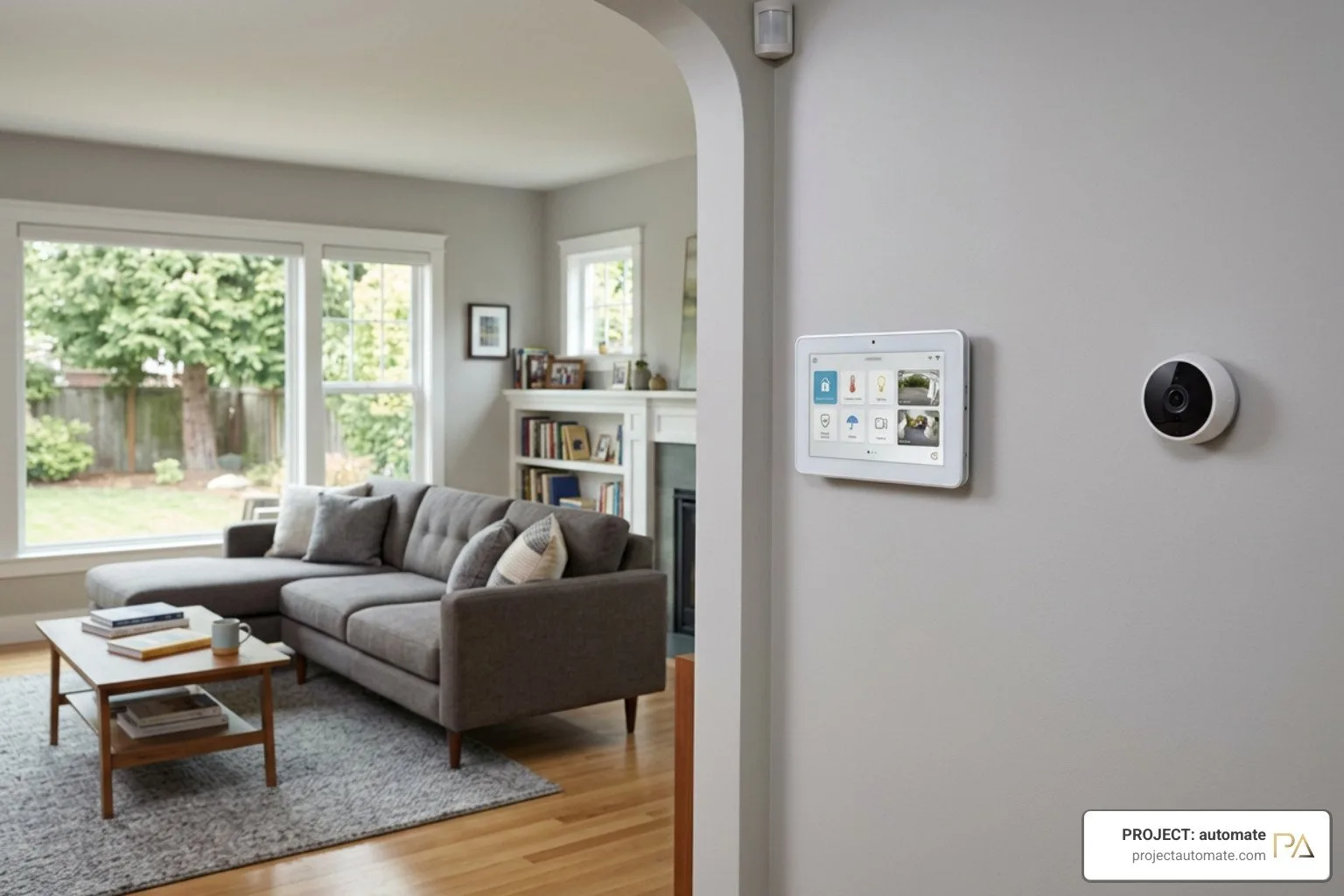
Home security is the foundation everything else in your house depends on — your family’s safety, your peace of mind, and the protection of everything you own. Roughly 58% of U.S. burglaries involve forced entry, the average burglary takes just 90 seconds to 12 minutes, and police solve only about 13% of break-ins due to a lack of evidence. On the other side of that equation, a visible, well-designed system changes a burglar’s calculation — an estimated 60% of burglars won’t attempt a break-in if they see an alarm system in place.
DIY Kits vs. Professionally Integrated Systems
Home security has effectively split into two paths. Mass-market DIY kits offer a quick, tool-free entry point — reasonable for renters or temporary living situations, but they come with real compromises: bulky plastic sensors stuck on with double-sided tape, consumer-grade electronics with a 3 to 5 year lifespan, and reliance on home WiFi with regular battery changes. For architecturally significant homes, that hardware can visibly clash with the interior.
Professionally engineered systems take a different approach: sensors flush-mounted or hidden entirely, hardwired power with battery backup and cellular failover, and deep local integration with lighting, shading, and climate systems rather than just a basic cloud connection to a voice assistant.
What a Comprehensive System Actually Includes
A layered system combines several types of devices working together:
- Entry sensors: magnetic contact sensors on doors and windows, sometimes bored directly into the door jamb so they’re invisible when closed.
- Motion sensors: dual-technology sensors combine passive infrared heat detection with microwave sensing to confirm real movement, and can be calibrated to ignore pets up to about 80 pounds while remaining sensitive to human intruders.
- Glass break detectors: acoustic sensors tuned to the specific frequency of shattering glass, covering an entire room from one device — useful since burglars often break glass rather than trigger a contact sensor by opening a door.
- Tamper protection: sends an immediate alert if someone tries to physically remove a sensor or the control panel.
- Cameras: outdoor cameras act as a visual deterrent along rooflines and driveways; indoor cameras verify what’s happening inside; video doorbells let you see and speak with whoever’s at the door. Local network video recorders avoid subscription fees and the lag that comes with cloud-only storage.
Monitoring and Response
An alarm that only rings inside an empty house doesn’t help much if you’re asleep, traveling, or in a meeting. Professional monitoring routes a triggered signal through multiple communication paths, typically your home’s internet connection with an automatic cellular backup, so a cut line or power outage doesn’t take the whole system down. Industry-average response time from signal to homeowner contact is about 45 seconds; systems using direct-data routing can bring that under 35 seconds. Once an operator verifies the alarm, sometimes visually if video verification is enabled, they can request priority police dispatch.
The Financial Case
Beyond protecting your family, a monitored system carries real financial upside. Most major insurers offer premium discounts, typically 5 to 15%, for homes with a professionally monitored fire and burglary system. It’s also worth remembering that water damage is statistically more common than burglary and considerably more expensive to repair — the average claim runs around $3,863 — and smart water shut-off valves integrated into a security system can close the main the moment a leak is detected. The average burglary loss itself is around $2,251, on top of the disruption a break-in causes.
Bringing It Together
A security system works best as part of a coordinated home, not a standalone box on the wall. Arming an “away” mode can lock every door, adjust the thermostat, and lower the shades in one step. A triggered alarm at night can light a safe path through the house while flooding the exterior with light. Smart locks and keypads can replace physical keys entirely, with time-limited codes for guests or staff and a full log of who came and went.
If you’re weighing a basic DIY kit against a fully integrated system, or just want a second opinion on where the gaps are in your current setup, we’re happy to talk through what makes sense for your home.